PO-33 Scale Guides
Here are some guides I made to help those new to the PO-33 or music theory (or both) develop a better understanding of playing in melodic mode.
(right click and save as)
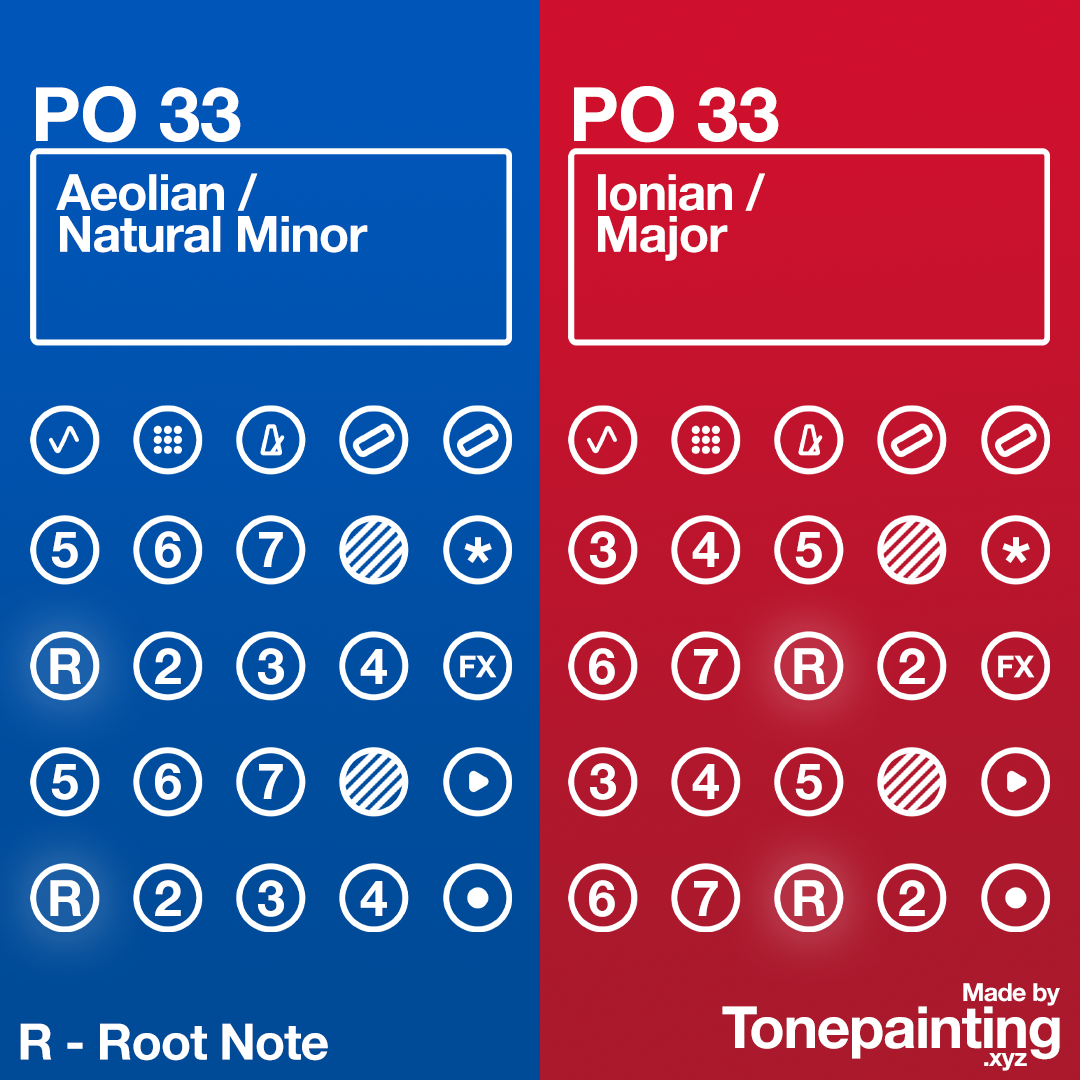
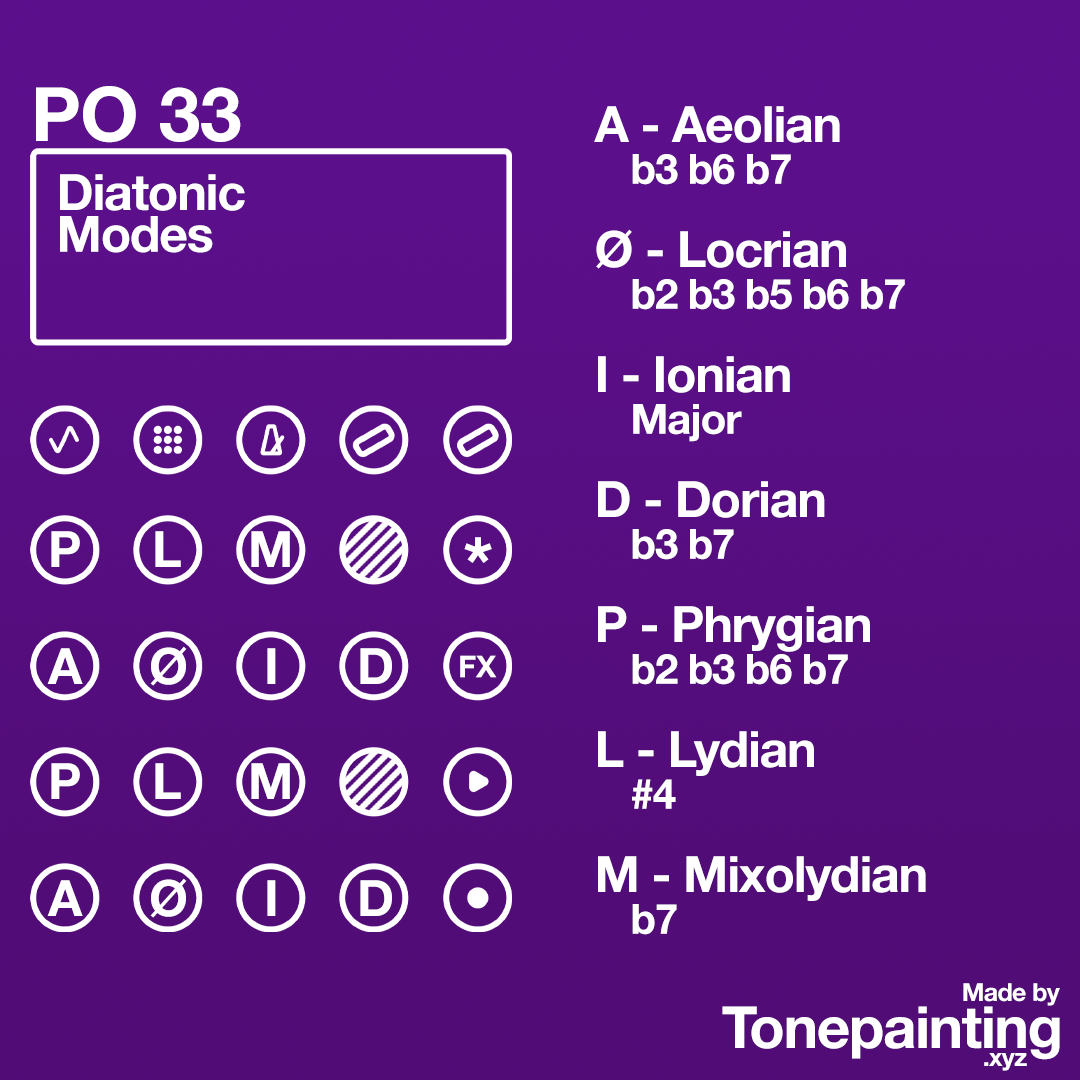
R in the Minor/Major guide is the root note. When playing in Major, you’ll probably want to pitch the sample down to match the pitch of the original root.
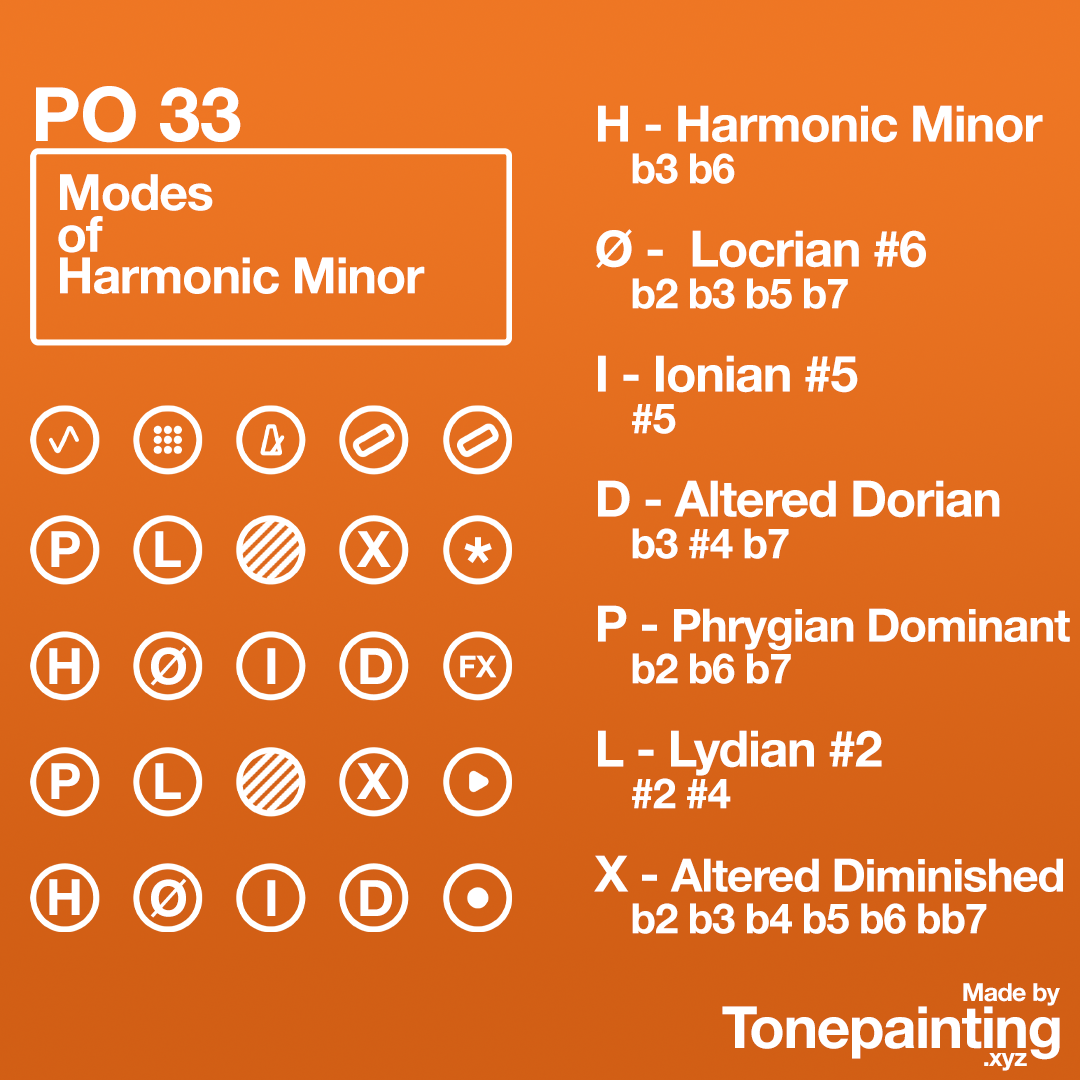
The letters in the mode guides refer to which mode you will be playing in if you treat that key as the root note.
The striped key in each guide is an “avoid note.” It doesn’t technically fit in the described scale.
It is worth noting that all of these scale/mode changes are relative. It is always the same collection of intervals; the only thing that changes is how you play it (i.e. C major vs A minor). Therefore, often you will find that you need to retune the sample based on where you move the “root” in order for a parallel transformation (i.e. C major vs C minor). This can be difficult, since the PO-33 doesn’t display the change in semitones when you re-pitch samples.
a note on the extra note
The addition of a non-diatonic note was likely an arbitrary decision so that the 7 note scale would fill 2 octaves perfectly within a grid of 16 keys. Playing the same key 2 rows up or down is always an octave shift because of this. However, it also introduces a new set of modes that can be built from the Harmonic Minor scale. While the diatonic modes are made up of whole steps and half steps, the modes of Harmonic Minor contain a combined whole and half step. This 3-semitone interval gives these modes a unique and exotic sound. Try experimenting with Phrygian Dominant, Altered Dorian, or Altered Diminished.
If you found this useful, consider a follow or share on Instagram.
If you made something cool using this technique, tag me in it or DM me!